
Ness in ‘New Yorker’ and review of ‘Upon a White Horse’

Among the many visitors to the final season of excavation in 2024 was Alex Ross, whose article has now been published in The New Yorker magazine.
Another Ross visiting us that summer was Peter Ross, who wrote a piece for The Smithsonian Magazine and who has since published a book. Here, Jo Bourne, who excavated at the Ness of Brodgar from 2013 to 2024 and is the author of Flint: A Lithic Love Letter, shares her thoughts on Peter’s new publication below.

Peter Ross’s new book, Upon a White Horse: Journeys in Ancient Britain and Ireland smells of grass, woodsmoke and irony mud in the rain.
Ross spent a year-and-a-half tracing our ancient monuments and other treasures across the British Isles. Their stories, told through conversations with their modern guardians: archaeologists, keepers, rangers, poets, druids and devotees, flare into brilliant life on the page.
He travels from Kent to Wiltshire; Wales to Orkney by way of ancient stone circles and modern monuments. He follows King Arthur to Stonehenge in the dark on the winter solstice; talks to the vicar of Cerne Abbas by the southern Giant on Mayday’s eve and climbs to the Uffington horse of the title at summer sunset. There are monuments so known that they form part of our deep cultural being. Others are unfamiliar; far away in space and time but no less important for that.
This is not so much a history of our past than a modern retelling. Nobody knows who built or made the prehistoric monuments these islands inherited nor why. But their meanings for the 21st century visitors and custodians Ross encounters is evident. And while meanings for individuals may differ, all share a reverence for place and a deep sense of landscape and “home”.
He crosses to Sutton Hoo in Woodbridge for a vanished king, then back to Ireland, for a moving encounter with the corporeal: bog bodies. He looks into their faces – but they tell nothing of their world beyond their tragic ritual deaths. Then he crosses time for Hoy’s Betty Corrigall, victim of her society beliefs; hauntingly preserved by the land itself.
After listening to everyone else’s story, Ross tells his own: the account of a path not taken is as compelling a tale as any in the book.
We are all hardwired for wonder, and it’s this sense of awe in the face of the deep past – with monuments as anchors in uncertain times – that pervades the book.
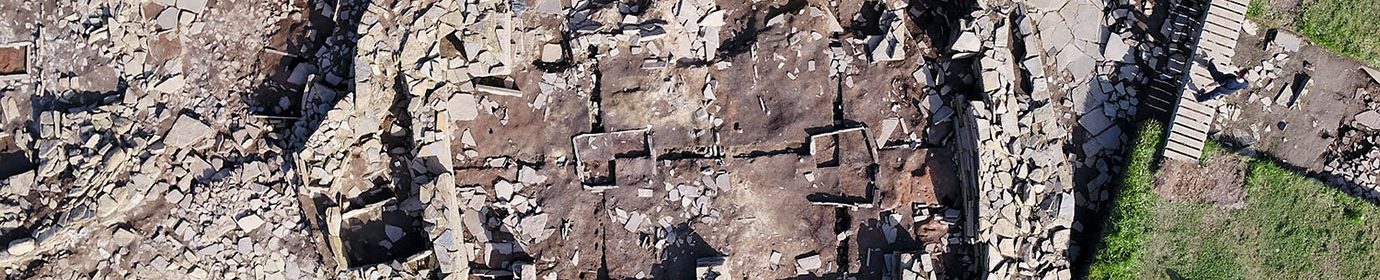
In the final pages, Ross visits the Ness of Brodgar, coming in the last days of the site’s 20 year excavation. His account was featured in January 2025’s Smithsonian Magazine, here adapted for the book. His conversations with the Ness team tell everything we materially know and everything we don’t. He writes of the strange-ness, uncanny-ness and mysterious-ness of the site, concluding “they did some really weird things”. But he also captures the wistfulness of those last days, returning to speak to director Nick Card at summer’s end, with 20 years of digging now complete.
This beautiful book is many things: travel guide, history, folkloric account and anthropological memoir, and the writing is truly lovely. Ross is a wonderful companion to walk alongside, taking the reader to places they didn’t know, and didn’t know they needed to go.
Peter Ross is author of the bestseller Steeple Chasing and prize-winning A Tomb With A View.
Upon a White Horse: Journeys in Ancient Britain and Ireland is published by Headline, priced £22, and available from bookshops now.


